
Growing avocado consumption, changing retail demands, and new operational challenges are reshaping Europe's fruit ripening industry.
For Europe's fruit importers, distributors, and ripening specialists, getting fruit to the right stage of ripeness at the right time is becoming more challenging. Different origins, varieties, and delivery schedules make it essential to manage ripening carefully and deliver the consistent quality retailers and consumers expect.
Bananas lead the market, while avocados offer new opportunities
Bananas remain the largest segment of commercial fruit ripening. According to the FAO, the European Union imported approximately 5.17 million metric tons of bananas in 2024, making it the world's largest banana import market.
Meanwhile, avocados are creating new opportunities. According to CBI, European avocado imports reached approximately 963,000 metric tons in 2024, while average consumption rose to 1.7 kg per person, up from around 1.4 kg in 2020–2021.
Growth varies across Europe. France and Scandinavia are relatively mature avocado markets, while Germany, Italy, and Eastern Europe offer further potential.
The growing popularity of ready-to-eat avocados is particularly significant. In the Netherlands, for example, ready-to-eat fruit accounted for 57% of avocado sales in 2024, compared with 47% in 2020.
Consistency and efficiency matter more than ever
As ready-to-eat programs expand, ripening operators need to deliver fruit with the right firmness, appearance, and eating quality, exactly when customers need it.
This can be challenging when working with fruit at different stages of maturity. Uneven ripening can complicate inventory management, delay deliveries, and increase food waste.
Operators must also keep costs under control while maintaining quality. Labor, energy, and day-to-day operating expenses all influence their decisions, making reliable, flexible, and easy-to-use ripening systems increasingly valuable.
“Existing ethylene systems work, but is there a better way?”
Is it time to rethink ethylene application?
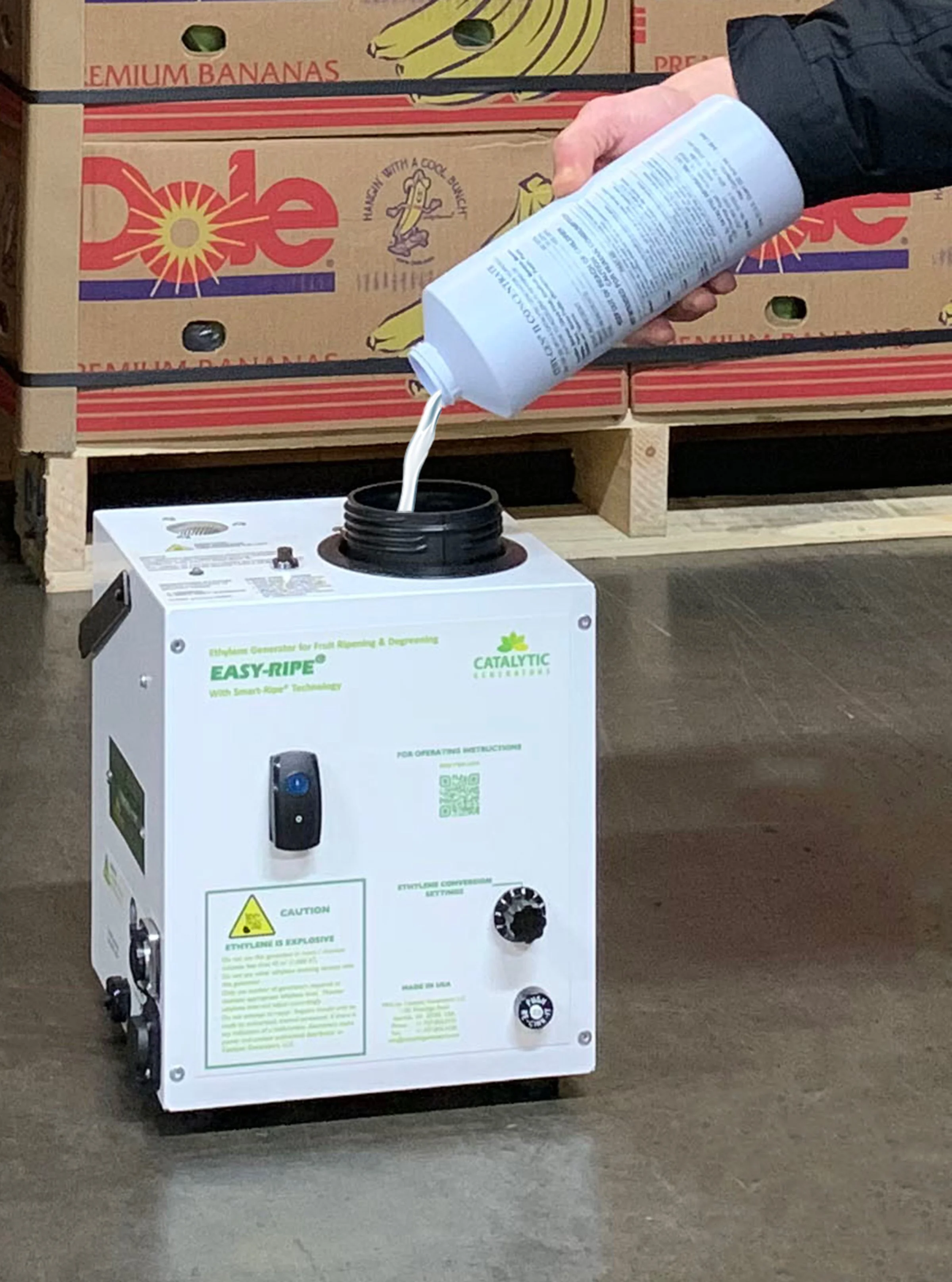
Ethylene plays a key role in the controlled ripening of bananas, avocados, and other climacteric fruits. Operators can choose between different application methods, from traditional compressed gas systems to on-site ethylene generation.
Greg Akins, President and CEO of Catalytic Generators, believes that one of the biggest challenges is encouraging operators to reconsider familiar practices.
“Existing ethylene systems work, but is there a better way?” he asks. “Our challenge is to demonstrate to European ripeners the advantages of an alternative approach.”
For ripening operators, the decision comes down to practical considerations: how easy the system is to operate, how consistently it applies ethylene, and how well it adapts to different ripening-room configurations.